

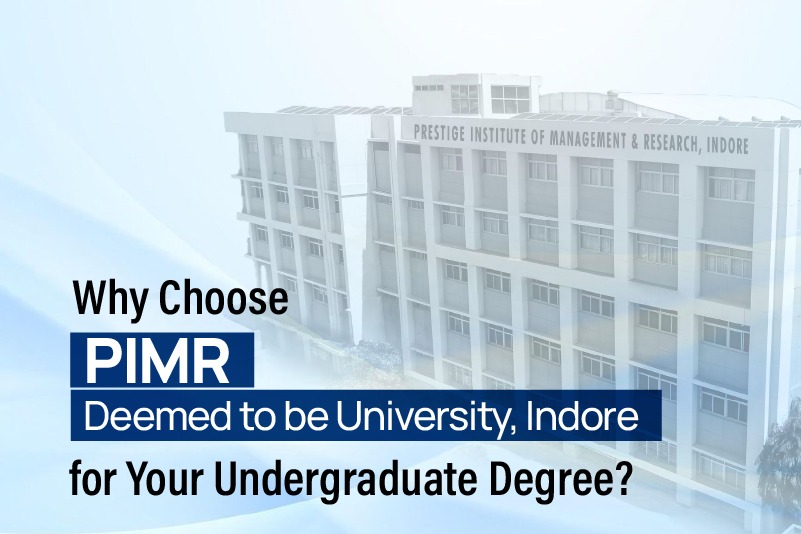
Why Choose PIMR, Deemed To Be University, Indore, for Your Undergraduate Degree?
Choosing the right university after Class 12 is one of the most important decisions for students planning their academic and professional future. A good undergraduate education should offer more than classroom learning. It should help students develop practical skills, explore career opportunities, build confidence, and prepare for the changing demands of the professional world.
For students exploring higher education in Madhya Pradesh, Prestige Institute of Management and Research (PIMR), Deemed To Be University, Indore, is an institution worth considering. With a focus on management, commerce, law, and other academic disciplines, PIMR offers opportunities for students to explore their interests and work towards their career goals.
Whether you are interested in business management, commerce, computer applications, law, or media studies, understanding the available programmes and learning environment can help you make an informed decision.
In this blog, we will explore why students may consider PIMR, Deemed To Be University, Indore, for their undergraduate degree and what factors to evaluate before applying.
- Diverse Undergraduate Programmes
One of the first things students should consider when selecting a university is whether it offers a programme aligned with their interests and career aspirations.
PIMR, Deemed To Be University, Indore, offers undergraduate learning opportunities across different areas of study. Depending on the programme and current admission cycle, students can explore options in management, commerce, law, computer applications, and media-related disciplines.
These fields provide different academic pathways:
- Business and Management: Suitable for students interested in business operations, entrepreneurship, marketing, and management.
- Commerce: Relevant for students planning careers in accounting, finance, taxation, banking, and business.
- Computer Applications: An option for students interested in computer systems, programming, and information technology.
- Law: Suitable for students interested in legal studies, advocacy, corporate law, and legal research.
- Media and Communication: Relevant for students interested in journalism, digital media, public relations, and communication.
Students should review the latest official programme list and eligibility requirements to confirm which courses are available for their preferred academic session.
- Career-Oriented Learning Opportunities
A university education should help students connect theoretical knowledge with practical applications. Career-oriented learning can make it easier to understand how academic concepts are used in professional settings.
When evaluating PIMR, students should explore the practical learning opportunities associated with their chosen programme, including projects, presentations, case studies, internships, and industry interactions where available.
For example, management students can benefit from studying business scenarios and developing problem-solving skills. Commerce students can strengthen their understanding of accounting and financial concepts, while law students can explore legal reasoning, research, and case analysis.
Such experiences can help students develop the confidence and professional awareness needed to prepare for future employment or further studies.
- A Focus on Industry-Relevant Skills
Employers often look for graduates who can combine subject knowledge with communication, analytical thinking, teamwork, and problem-solving abilities.
Along with academic learning, undergraduate students should focus on developing skills relevant to their chosen career path.
These may include:
- Communication and presentation skills
- Critical thinking and decision-making
- Research and analytical abilities
- Teamwork and collaboration
- Digital literacy and technical skills
- Time management and professional discipline
Students considering PIMR can review the curriculum, practical assignments, co-curricular activities, and career development opportunities offered by their preferred department.
Building these skills during college can help graduates prepare for entry-level roles and postgraduate education.
- Opportunities to Explore Different Career Paths
An undergraduate degree is an important starting point, but students do not always need to commit to one specific career immediately after Class 12. College provides an opportunity to understand different industries, discover personal strengths, and explore possible professional directions.
Depending on their programme and additional qualifications, graduates may consider careers such as:
| Area of Study | Potential Career Paths |
| Management | Marketing executive, business development executive, management trainee |
| Commerce | Accounts executive, banking associate, taxation assistant |
| Computer Applications | Junior software developer, IT support executive, application support associate |
| Law | Legal associate, legal researcher, compliance-related roles |
| Media and Communication | Content executive, journalism trainee, public relations executive |
These are potential pathways rather than guaranteed employment outcomes. Actual opportunities depend on the degree, individual skills, employer requirements, experience, and any additional qualifications needed.
Students should also explore internships and professional certifications that can complement their undergraduate education.
- A Learning Environment That Supports Student Development
The college environment can influence a student’s academic performance, confidence, and overall development.
When choosing PIMR, prospective students should evaluate the facilities and academic support available for their chosen course. Important considerations include classroom resources, library facilities, faculty expertise, technology-enabled learning, student activities, and opportunities to participate in academic events.
A supportive learning environment can encourage students to ask questions, collaborate with peers, participate in discussions, and develop independent thinking.
Campus visits, official programme information, and conversations with current students can provide useful insights into the learning experience.
- Exposure Beyond Classroom Learning
Undergraduate education becomes more meaningful when students have opportunities to participate in activities beyond their regular syllabus.
Academic competitions, seminars, workshops, presentations, student clubs, cultural activities, and industry interactions can help students develop confidence and interpersonal skills.
The availability and format of these opportunities may differ by department and academic year. Students interested in PIMR should enquire about the activities offered to students enrolled in their preferred programme.
Participating in relevant extracurricular activities can also help students explore their interests, build professional networks, and develop transferable skills.
- Preparing for Higher Education and Professional Qualifications
An undergraduate degree can serve as a foundation for further academic and professional development.
Students completing their bachelor’s degree may consider postgraduate programmes, professional qualifications, competitive examinations, or specialised training depending on their interests and eligibility.
For example:
- Management graduates may explore an MBA or specialised management programmes.
- Commerce graduates may consider M.Com, MBA, CA, CMA, CS, or other relevant qualifications.
- Computer applications graduates may pursue advanced studies in computer science, IT, or related disciplines.
- Law graduates should explore the postgraduate and professional pathways available for their specific law degree.
- Media graduates may consider advanced studies in journalism, communication, advertising, or digital media.
Students should plan their next steps early and review the eligibility criteria of the institutions and professional bodies they wish to approach.
- Choosing an Undergraduate Course That Matches Your Goals
The right university is important, but choosing the right course is equally essential.
Before applying to PIMR, students should identify their interests, academic strengths, and long-term goals. A student who enjoys business and leadership may prefer management, while someone interested in financial records and numerical analysis may find commerce more suitable.
Similarly, students interested in technology, legal systems, or communication should evaluate the corresponding programmes carefully.
Consider the following questions before making your decision:
- Does the course match my interests and strengths?
- What subjects will I study during the programme?
- What practical learning opportunities are available?
- What are the eligibility criteria and admission requirements?
- What are the tuition fees and other expenses?
- What career or higher education pathways could follow this degree?
Answering these questions can help you select a programme based on informed expectations rather than choosing solely on popularity or peer recommendations.
- Important Factors to Check Before Admission
Before finalising your admission to PIMR, Deemed To Be University, Indore, review the official information for your chosen programme.
Pay attention to the following factors:
Programme availability: Confirm that the course is offered for your intended admission session.
Eligibility criteria: Check the required Class 12 subjects, minimum marks, entrance requirements, and any programme-specific conditions.
Curriculum: Review the subjects, assessment methods, and opportunities for practical learning.
Fees and scholarships: Understand the fee structure, payment schedule, available scholarships, and applicable eligibility conditions.
Internships and career support: Ask about internship opportunities, placement assistance, career counselling, and relevant industry engagement.
Campus facilities: Explore the learning resources and student facilities available for your programme.
For accurate and updated information, refer to PIMR’s official website at https://pimrindore.ac.in/ or contact the university’s admissions team.
Frequently Asked Questions (FAQs)
- Why should I consider PIMR, Deemed To Be University, Indore, for undergraduate studies?
Students can consider PIMR based on its academic programmes, curriculum, learning environment, and opportunities relevant to their chosen discipline. Reviewing the official course details and available student support can help determine whether the university matches their goals.
- Which undergraduate courses can I explore at PIMR Indore?
Students can explore programmes in areas such as management, commerce, law, computer applications, and media-related studies, subject to current programme availability. Check the official university website for the latest course list and admission details.
- Is PIMR Indore suitable for students interested in management?
Students interested in business, marketing, entrepreneurship, and management can explore the relevant undergraduate programmes at PIMR. They should review the course curriculum, practical learning opportunities, and admission requirements before applying.
- What career opportunities are available after an undergraduate degree?
Career opportunities depend on the chosen discipline, academic performance, practical skills, and experience. Graduates may pursue entry-level roles, internships, professional qualifications, or postgraduate education relevant to their field.
- How can I apply for undergraduate admission at PIMR Indore?
Start by visiting the official university website and checking the latest admissions information. Review the eligibility criteria, available programmes, fees, required documents, and application procedure for your intended academic session.
- What should I consider when choosing an undergraduate programme?
Consider your interests, academic strengths, course curriculum, future career options, fees, practical learning opportunities, and eligibility requirements. Selecting a course that aligns with your goals can help you make better use of your undergraduate years.
Conclusion
Choosing an undergraduate university is about finding an academic environment that aligns with your interests, ambitions, and future plans. PIMR, Deemed To Be University, Indore, is an option for students exploring higher education in fields such as management, commerce, law, computer applications, and media-related studies.
Before making a final decision, review the available programmes, curriculum, admission requirements, fees, campus facilities, and career support opportunities. Speak with the admissions team and gather reliable information to understand what your preferred course offers.
With thoughtful course selection, consistent academic effort, and a commitment to practical skill development, students can use their undergraduate years to build a strong foundation for further education and professional growth.
Ready to take the next step in your academic journey? Visit PIMR, Deemed To Be University, Indore to explore official programme information and admission updates for your preferred undergraduate course.